Patients read the waiting room as clinical evidence
It is the only part of your operation most patients ever see, so it carries disproportionate weight in how care is perceived.
Serving Santa Barbara, California & surrounding areas
Mon–Fri 8am–6pm · Sat 9am–2pm
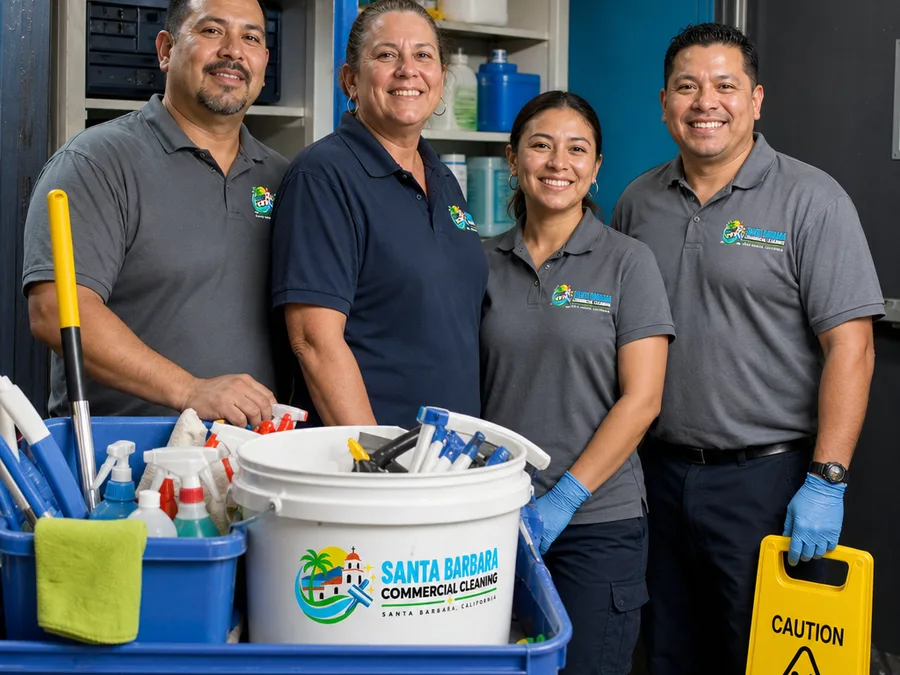
Clinics, practices and medical offices · Santa Barbara
In healthcare the visible standard and the actual standard both matter. We work to documented infection-control protocols with the records that compliance reviews require.
Documented protocols · Trained crews · Compliance-ready records
What this industry deals with
It is the only part of your operation most patients ever see, so it carries disproportionate weight in how care is perceived.
Without defined color-coded equipment and directional protocols, cleaning can move contamination rather than remove it.
Reviews ask what was cleaned, when, and to what protocol. Most vendors cannot produce it.
Check-in counters, chairs, door handles, and shared equipment are contacted constantly by people who are already unwell.
Sick patients sit in one room for extended periods, which makes it the highest-risk space in the building.
Standard janitorial staff are not trained in bloodborne pathogen awareness or medical waste boundaries.
Our approach
Medical cleaning has to satisfy an infection-control standard and a patient-perception standard at the same time. We use trained crews, documented protocols, and separated equipment, and we keep the records that make a compliance review straightforward.
Written procedures per area, so the standard is defined rather than left to the individual cleaner.
Separate equipment for restrooms, clinical areas, and общие spaces prevents cross-contamination between zones.
Appropriate products with correct dwell times, which is where most disinfection actually fails.
Seating, counters, and shared surfaces get the attention the room's actual risk profile warrants.
Staff briefed on bloodborne pathogen awareness, PPE, and the boundary around regulated medical waste.
Written logs of areas, dates, and protocols, ready for compliance review rather than assembled afterward.
Service outside clinic hours so cleaning never intersects with patient care.
Where to start
The recurring clinical and administrative routine built on documented protocols.
Daily coverage with assigned, trained crews and documented sanitation records.
Periodic deep sanitation beyond the daily routine, including upholstery and soft surfaces.
Sealed, sanitary hard floors that withstand constant disinfection without degrading.
Administrative and back-office areas held to the same consistent standard.
Entry and partition glass that signals the standard of care inside the practice.
What you actually get
01
The waiting room stops undermining the quality of care you actually provide.
02
Separated equipment and correct disinfection reduce transmission in the highest-risk room you have.
03
Sanitation records are maintained continuously rather than assembled under pressure.
04
Clinical teams are not absorbing cleaning gaps into their own workload.
05
Service is scheduled entirely outside patient hours.
How we run it
Five stages, adapted to the specific operating realities of this industry.
We review clinical zones, administrative areas, patient flow, and your existing infection-control requirements.
A written scope specifying products, dwell times, equipment separation, and documentation per area.
Crews briefed on medical-environment requirements, PPE, and regulated waste boundaries before the first visit.
Supervisor verification against protocol, with sanitation records maintained for compliance.
Protocols update as guidance, your practice, or your compliance requirements change.
Trust and experience
We service medical and dental practices, clinics, and specialist offices in Santa Barbara. Scopes are written around infection-control expectations and the documentation compliance reviews ask for.
Liability coverage carried on every job, with certificates available on request.
Bonding in place for work inside your premises, including after-hours access.
Every assigned crew member is screened before they set foot in your facility.
Written scopes and supervisor inspections, so the standard does not depend on who shows up.
Planning your service
Pricing is built around your facility rather than a rate card. Two businesses in this industry can look similar on paper and generate very different cleaning workloads.
After the walkthrough you receive a written scope and a firm quote, so you can compare vendors on identical terms.
Exam and treatment rooms carry a higher protocol burden than general square footage.
Throughput drives both waiting room risk and restroom workload.
Specific infection-control standards and record-keeping add defined scope.
Daily service is standard for active clinics; frequency scales with patient hours.
Transparent pricing · No hidden fees · No long-term contracts required
Straight answers before you schedule
Yes. Crews receive bloodborne pathogen awareness, PPE, and equipment separation training, and are briefed on your specific protocols before the first visit. Staff are background-checked. General janitorial staff are not sent into clinical spaces.
No. Regulated medical waste, sharps, and biohazardous material require a licensed medical waste contractor. We clean around those systems following your procedures, and the boundary is written explicitly into the scope so there is no ambiguity.
Yes. We maintain written records of areas cleaned, dates, and protocols applied, and provide them for reviews and internal reporting. For medical clients this is part of the standard scope rather than an add-on.
Color-coded equipment separation, with distinct tools for restrooms, clinical areas, and common spaces. Protocols also define directional cleaning and disinfectant dwell times, which is where disinfection most often fails in practice.
Yes, and it is the standard arrangement. Service is scheduled outside clinic hours entirely so cleaning never intersects with patient care or compromises privacy.
Request a quote
Tell us about your facility and we will come back with a written scope built around how it actually operates, plus a firm price.
Prefer to talk? Call (805) 695-3360.
115 W Micheltorena St Unit 5, Santa Barbara, CA 93101
Free assessment • Fast response • No obligation
We will assess your clinical zones and compliance requirements, then build protocols around them.
Free assessment • Fast response • No obligation